

The “We” in Neohumanist Education
Zonnelicht, Netherlands
By Janet van Kempen, Pedagogical Coach at Zonnelicht
This year, something unexpected happened during our Goede Doelen Week (charity event week). Not the fundraising itself, not the amount we raised, but the way the children took ownership of something that could so easily have stayed an adult-led project.
I want to tell you how that happened.
It started with a choice
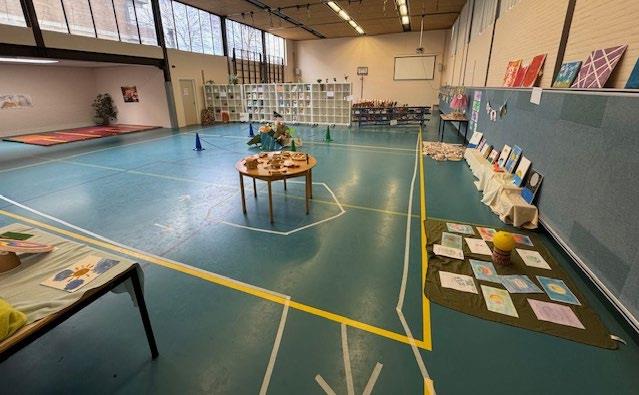
Our team came to the children with four organisations, each working in a very different part of the world. We did not present facts and figures. We told stories. A child in Nepal walking two hours to school each morning. Families in Ukraine whose children are now learning in temporary shelters. Children in India discovering their own voice through music. We then asked the children a simple question: where does your heart go? The older children, our after-school group of 8 and above, took on the decision together. They talked it through, they listened to each other, and they chose AMURTEL Family. But when it came to the exhibition, everyone was involved. Toddlers, preschoolers, older children, educators, and parents. The making of it was a shared thing.
The video call that changed things
We wanted the connection to feel real, not abstract. Through our contact with Didi Hladinii, who works with children who fled Syria, we arranged a live video call. Not a film, not a presentation. A real conversation. I watched our children before the call: curious, a little uncertain. During the call, something shifted. They were not looking at a poster of a child in need. They were looking at actual children, in an actual space, with an actual daily life that looked nothing like their own.
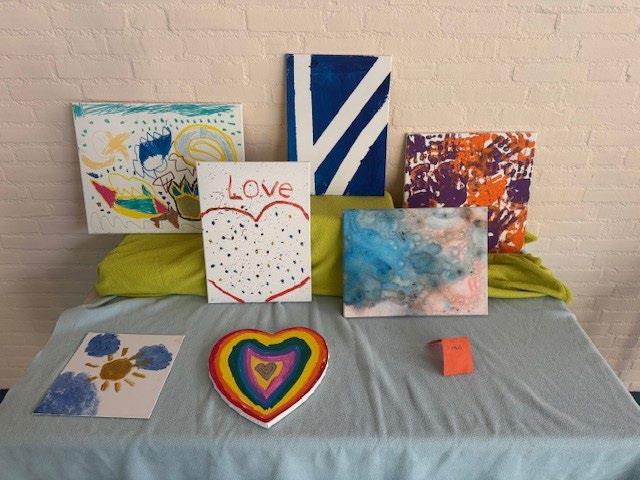
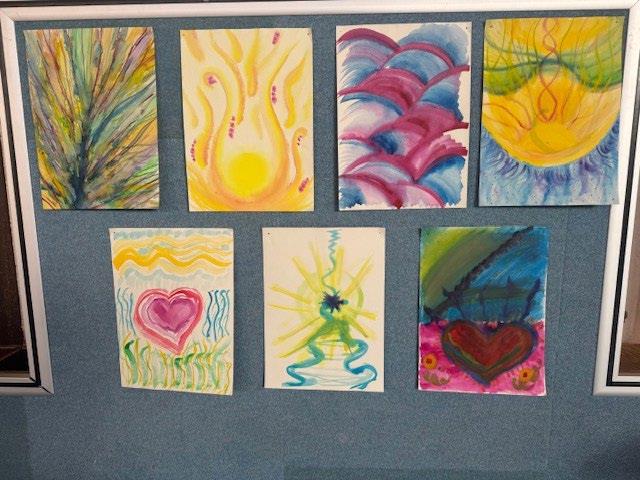
Afterward, the room was quiet for a little while. A thoughtful quiet. The kind that means something landed. The questions that came after were not polite or rehearsed. They were honest. And when the children started making artwork for the exhibition, when they organised the food stalls and counted the coins, you could feel that this came from a different place than it would have otherwise. They were not raising money for an idea. They were raising it for children they had seen.
The day of the exhibition
We invited families to come. Parents, grandparents, anyone who wanted to. We asked whether families might contribute something, and many did. Some parents came with food they had made at home so we could sell it together. Others just showed up, and that was already a lot
What I had not fully anticipated was how naturally the children took the lead. They had made the artwork. They knew the story behind it. So they were the ones who welcomed the guests, explained the project, handled the food stall, guided people through the exhibition. A six-year-old told a grandmother who AMURT/AMURTEL were and why her group had chosen them. She did not need prompting. She simply knew. For us as educators, there was not much to do that day except watch.
What I take away from this
Children do not need to be taught empathy as a concept. What they need is a real encounter and the space to respond to it in their own way. When we give them that, and when we genuinely include them in decisions rather than just going through the motions, they often surprise us. This week reminded me of why I do this work. Not the fundraising, though we are genuinely proud of what we raised together. But the moment a child explains to an adult why this matters. That is what stays with me.