

By Avtk. Ananda Gunamaya Ac.
DAY 1 – Physical Development
Day 1 focused on Physical Development. After a breathing exercise we discussed the importance of good habits, how we can help our students so that these become routine in their lives: drinking enough water, regular physical exercises, selecting proper food, and practicing yoga exercises (asanas). Although we did not have much time available, the participants requested to have a practical yoga class. The teachers were very interested in all this information, as they wanted to benefit in their personal life, so there were a lot of questions about health.
Together, we discussed which of these activities were already going on in the school, if they were not then how they could be introduced and if they were, how they could be improved. And then this happened: Stressing the harm that some foods can cause, especially non-vegetarian food for young children, I could see the concern of the school staff, and unexpectedly our headmaster, Lokesh, announced on the spot that he was not going to allow sausage selling on the school premises anymore. The school doesn’t have a cantina yet, so students buy lunch from local sellers, and most of them, especially the preschoolers – were eating sausages because it is a cheap meat. In the following day, there were no sausages to be seen and Lokesh requested me to explain to the older students (JSS) the reasons we should avoid sausages!
DAY 2 – Mental Development
As most of the participants were not acquainted with meditation yet, I proposed that along with deep breathing we see ourselves alone surrounded by peace.
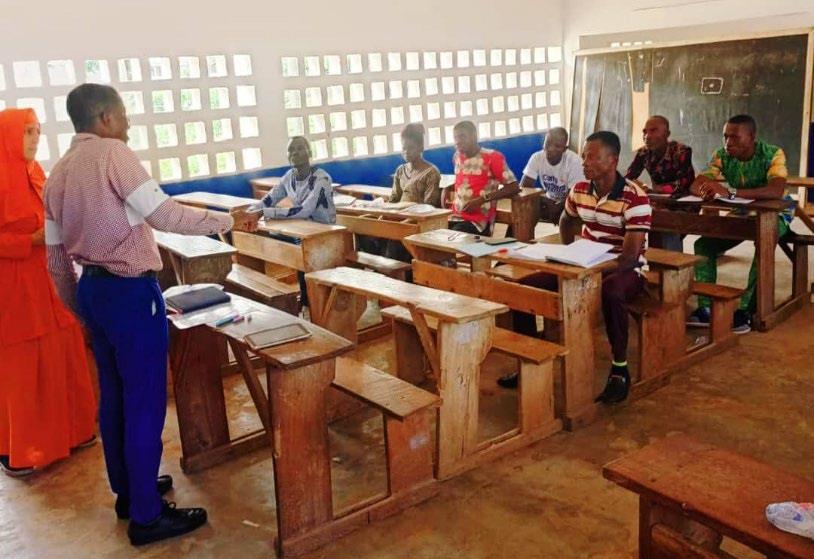
Talking about many aspects of mental development we mostly discussed the limiting influence of Neo-colonialism in African conventional education. This class was so deep and resonated so much with the participants that there was not a sound during the talk. After reviewing what Neohumanism is we went on to discuss the facets of various narrows sentiments which prevent us from living Neohumanism.
Often divisive tendencies are utilized by people who want to manipulate the masses. So, we discussed the consequences of tribalism; the benefits of intermarriage, and what is the reality of people in the community when it comes about tolerating other religions, etc.
We talked about how leadership and creativity are attributes necessary to break neocolonialism. What we see, however, is that instead of being encouraged, students are rather repressed in the existing educational system, through humiliation or punishment. How can we keep a balance between discipline and allowing our students to express these important qualities at the same time? Often, more creative children are labelled as difficult because adults need to find special ways to deal with them to get work done. In these cases, a helpful tool is to take make careful observations of each student, take notes, and reflect on the various parts of your notes; find patterns of how a child behaves in different activities, the way s/he interacts with others, the way s/he communicates, dresses, makes choices, deals with challenges, etc. The more pieces of the puzzle that are added, the more we can understand an individual. The systematic way to do that is known as “descriptive inquiry.” Indeed, this can help to avoid punishment in schools, which is so much in vogue in West Africa schools. In the beginning this process seems to consume too much of our time, but later the art of seeing becomes spontaneous and helps us to guide the students and deliver subjects more effectively.
The greater portion of the previous training was about morality, so we reviewed what was already being implemented in this respect and discussed the challenges. We explored how to improve rationality in our students, awaken their thirst to learn, and cultivate critical thinking when teaching academics. One approach is bringing questions which require deep reflection.
Returning to overcoming narrow sentiments, it is necessary to go through a process of mental expansion. First, building a base by accepting oneself – one’s sense of identity is very connected with one’s culture, mother tongue and motherland. On this aspect, we discussed how to reinforce the students’ mother tongue, which became a challenge since the use of “vernacular language” is abolished in the actual educational system proposed by the government. The school is already preparing cultural programs to present to the public from time to time, and now Lokesh had the inspiration to introduce a cultural day on a fixed day each week. I shared that in our school in Accra we have applied it with success; the children have a uniform with local designs (the Andinkra symbols). There is scope for creating their own individual African wear. That is a day when we practice more local dances, songs, and stories of their local culture.
These ideas made the teachers so absorbed in the topic! They were perplexed to understand how education has been used to prepare the field for foreign and internal exploitation. Also they were intrigued by associating the suppression of the mother
tongue with the establishment of an inferiority complex among the masses. Due to this complex of inferiority people feel powerless and dream of leaving their motherland for a better place instead of improving it.
I mentioned my experience with students from Lotus Children’s Center in Ghana: once children embrace their roots, they are able to go on contemplating the beauty of other peoples’, and expanding their love by feeling the Divine presence in all the forms of creation- so that Universalism emerges
DAY 3 – An Experience with Yoga Asanas
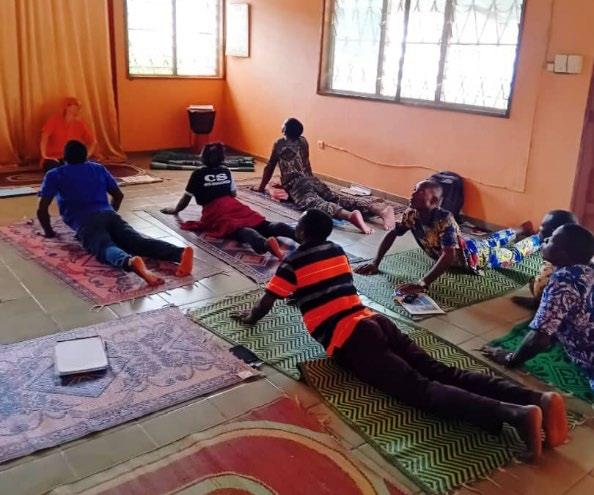
After guided meditation, with the mantra BABA NAM KEVALAM playing in the background, we did some basic asanas and talked about their benefits in controlling emotional tendencies.
I distributed a questionnaire which they were to fill out anonymously. This was for us to understand how the teachers felt after having applied some aspects of NHE for the last year and half; for suggestions to get the students more involved in introducing these new ideas in the school. Also, I needed to study how far I could go, so I asked questions to find out if they were comfortable in learning this new philosophy and if they were interested in going deeper into some of the yoga practices in their personal life. Their answers surprised me – many expressed interest in vegetarianism, asanas, and meditation. All of them were not just comfortable, but happy teaching and learning more about Morality. All teachers reported an improvement in the behavior of their students that even parents noted, such as improvement regarding non-stealing, kindness and being more respectful.
DAY 4 – The Potential of Arts
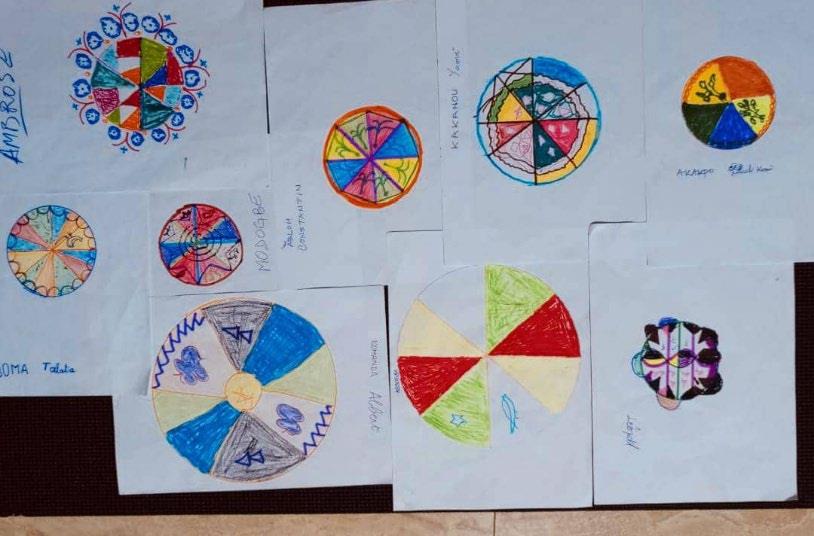
Still talking about psychic development, in silence they did art work right after meditation. This time we went deeper in meditation, now silently experiencing the mantra BABA NAM KEVALAM with breathing and ideation.
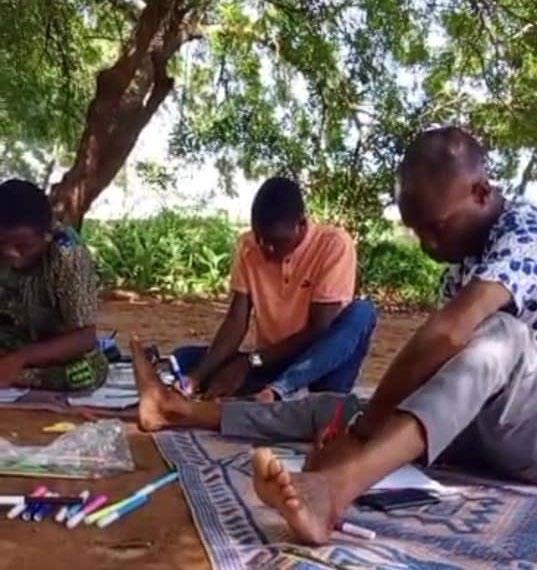
I could feel some were shy but it helped the fact that they were not allowed to interact talking. None got the opportunity to joke about someone else’s work. When they were done, that first impulse of feeling shy or trying to make fun of the colleagues was gone. It was a new thing for them, and we went further by bringing the feeling we had while working.
It is rewarding to observe that people feel thankful when you open doors to them to dive into their deeper beings. The way these teachers expressed it was by increasing their respect and regard towards me. A true progress as in the beginning we have been challenged by teachers refusing to sit for these classes since they were not part of the government exigencies.
DAY 5 – Spiritual Fulfilment
We sat for a final meeting to review the work we did together and also had a small class about the layers of the mind. This time I requested them to bring a tune for kirtan before our meditation. Taking advantage of the spiritual wave created, in this last class I talked about the difference between dedicating one’s life in pursuing worldly things and dedicating it to one’s spiritual progress without neglecting our responsibilities. I witnessed some hard hearts expressing soft feelings. A truly inspiring experience.