

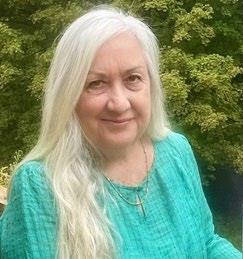
By Kathleen Kesson
Contemplative practices encompass many diverse activities; most feature an intentional approach to calming the mind, regulating the emotions, enhancing awareness, developing compassion, and cultivating insight/intuition. Contemplative education is the inclusion of contemplative practices into the learning environments, public and private, of young people of all ages from pre-school through university.
Acceptance of any form of contemplative practice in public schools varies widely across the globe. In India, for example, many schools allow, even encourage meditation in schools to improve student mental health and focus. Starting in 2018, the government of Delhi added “happiness classes” into the Indian curriculum, an educational model historically characterized by exams and rote learning, but which now includes Yoga and meditation as well as relevant stories and activities to improve student well-being. The many Neohumanist schools in India have featured Yoga and meditation in their curricula for decades now.
Across an ocean in the United States, acceptance of contemplative practices has been a tougher sell. “Moments of silence” in schools have been the subject of lawsuits for decades, attacked from all sides. Conservative Christian communities have long advocated for the legalization of prayer in school, though they would like to limit which religious perspective is featured (their own). From a secular point of view, “quiet time” is often seen as an infringement upon the constitutional separation of church and state.
It wasn’t until the early 2000’s that “mindfulness” practices, rooted in ancient Eastern wisdom traditions, began to make real headway into U.S. schools. Recent advances are often linked to the Covid pandemic and the accompanying increase in serious mental health issues among the young. Contemplative practices, including mindfulness, proved to be effective ways of both addressing and preventing these concerns. Long portrayed as a “stealth gateway” into Buddhism and Hinduism, and thus contrary to the Establishment Clause of the First Amendment, the battle proceeds.
Advocates of mindfulness practices draw support from vast amounts of current research pointing to results like improved academic engagement, higher order thinking, teacher well-being, and student mental health, plus greater empathy, perspective-taking, emotional control, and the enhanced quality of classroom relations. Opponents of mindfulness find a number of criticisms to launch at the practices, everything from concern about detachment and self-absorption to psychological risk with resulting harm. While research on the potential deleterious effects of contemplative practices is slim, authenticated cases do exist in the field concerning harm when an instructor lacks skill in trauma-informed practices. Given that the CDC (Center for Disease Control and Prevention) estimates up to 2/3 of adults have experienced some childhood trauma (Swedo et al., 2023), we must assume that many young people are carrying psychological burdens. This raises the important question of how well prepared people are to lead young people on an inward journey.
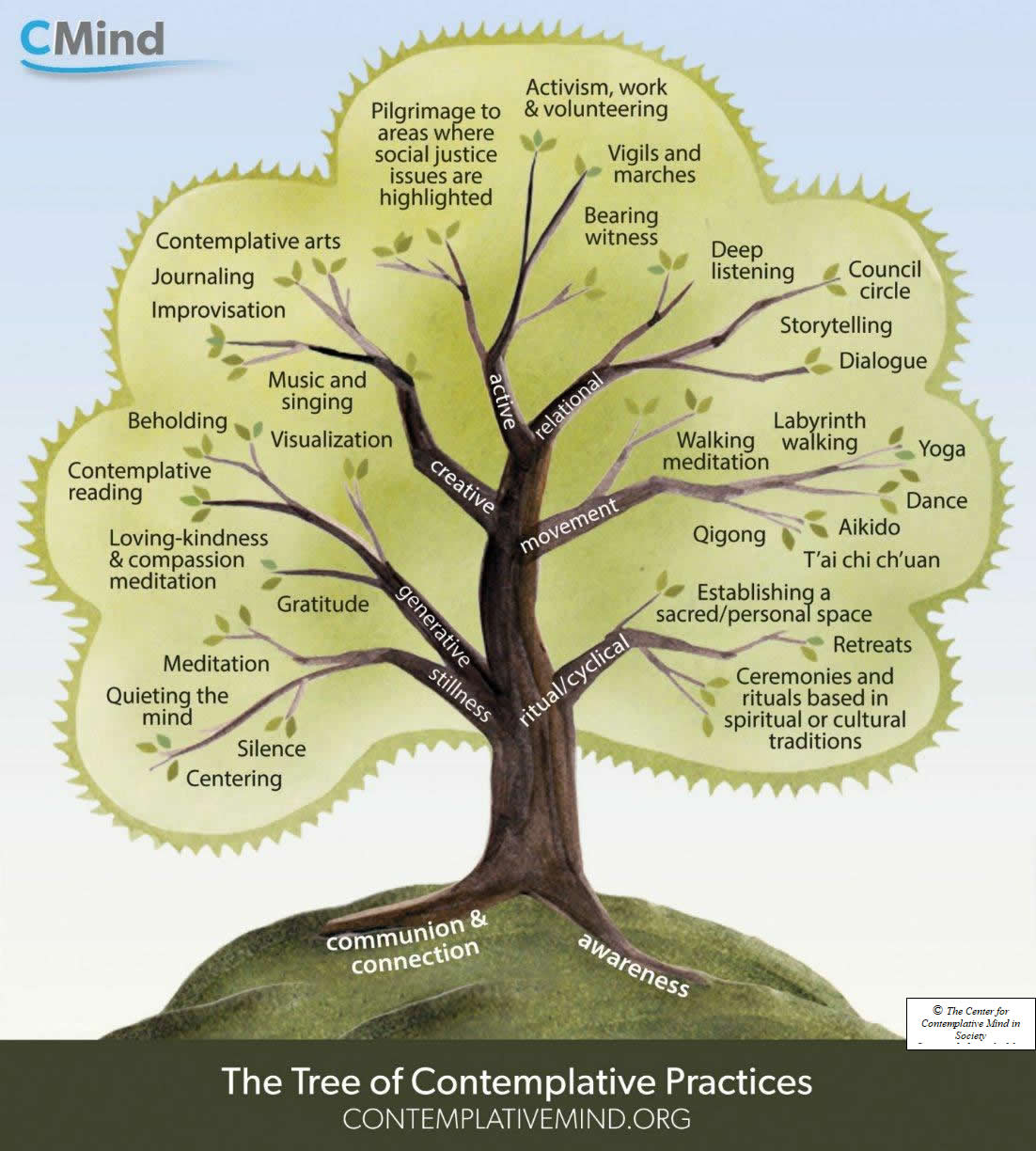
The implementation of mindfulness practice in schools is spreading rapidly, seen as an antidote to the high levels of student stress resulting not only from the pandemic, but also from other potentially catastrophic environmental, political, economic, and social disruptions. Increasingly, programs are adopting Yoga practices as an essential component including four basic elements of Yoga: (1) physical postures, (2) breathing exercises, (3) relaxation techniques, and (4) mindfulness and meditation practices, in addition to “a variety of additional educational, social-emotional, and didactic techniques to enhance students’ mental and physical health and behavior” (Butzer, Ebert, Telles, & Khalsa, 2015). A quick Internet search reveals that the number of both qualitative and quantitative research studies, including randomized, controlled studies, is expanding rapidly.
There is tremendous variability in training and expertise of those who offer Yoga in schools, as well as who teaches it (teachers, social workers, nurses, counselors, outside trained Yoga instructors), and what the programs feature. The study mentioned above looked at “36 programs that are currently offering school-based yoga programming, with nearly 5400 yoga instructors reaching students in more than 940 schools across the United States” (Butzer, et al., 2015). Almost half of the schools in the study required the “basic 200-hour, registered yoga teacher (RYT) certification by Yoga Alliance, the governing yoga-teacher training authority in the United States” (Butzer, et al., 2015). It is safe to say that contemplative practices have gained a strong foothold in the U.S. though the controversy is far from over.
The Contemplative Education Network (CEN)
Contemplative studies is an emergent academic field that includes research and scholarship on a variety of contemplative practices related to the wisdom traditions of the world as well as to the spontaneous transcendent experiences that humans report. The methodology of the field is interdisciplinary, encompassing neuroscience, cultural, religious, and historical studies, and contemplative pedagogy, which explores how the practices can help develop self-knowledge, ethical awareness, and psychological resilience. Many university programs are both theoretical and experiential, and can include meditation, yoga, and/or other embodied disciplines such as taiji (Tai-Chi), dance, and immersion in nature.
The Contemplative Education Network (CEN) was founded in Padua, Italy in 2024 and “brought together practitioners, scholars and scientists from across the world and across the developmental spectrum of education (e.g., pre-primary, primary, secondary, post-secondary education) to discuss issues at the intersection of contemplation and education” (https://contemplative-education.com). The aims of the network are multiple: to provide mutual support for people hoping to begin or improve contemplative practices in their school setting, to build a strong and connected community, and to share research, practices, curriculum design, and implementation strategies. Ultimately, we may see emergent criteria for qualified teachers of contemplative practices and policy briefs that include research on best practices. In contrast to still prevailing assumptions that research must be reductive in nature, only documenting what can be easily measured, controlled, and quantified, the field advocates and accepts storytelling and lived experience as complementary dimensions of conventional scientific studies.
I was invited to participate in this new network, and have attended a number of webinars and meetings. I have found members to be highly engaged, extremely knowledgeable, and possessed of a collective wealth of experience. They have expressed interest in Neohumanist Education; one consistent theme in the dialogue seems to be the question of how contemplative practices can be thought of as not merely “stand-alone” classes, but seamlessly integrated with the academic disciplines. Our textbook for the Neohumanist Education Teacher Preparation program features just that: a multitude of ways to incorporate contemplative practices across the curriculum that have been field-tested for decades now (Kesson, 2024).
Social-Emotional Learning (SEL) and Contemplative Practice
Recently a guest speaker in the CEN webinar series was Dr. Kim Schonert-Reichl of the University of Illinois-Chicago, who holds the NoVo Foundation Endowed Chair in Social and Emotional Learning. Dr. Schonert-Reichl facilitated two hours of informed discussion of Social-Emotional Learning and its connection to other contemplative practices. Dr. Schonert-Reichl began her career as a classroom teacher and then went on to do clinical research with children and adolescents in the field of social-emotional learning, focused particularly on the identification of the processes and mechanisms that foster positive human qualities such as empathy, compassion, happiness, optimism, altruism, resiliency, and social responsibility. Any student of Neohumanist Education will recognize here essential aims of the Neohumanist pedagogical model across the grade levels.
The Social-Emotional Learning Lab established by Dr. Kimberly Schonert-Reichl at the University of British Columbia sponsors research on various programs that integrate mindfulness and social-emotional learning, which has become fairly well-established educational practice in many countries since the publication of Daniel Goleman’s best-selling book Emotional Intelligence in 1995. The Learning Lab issued the Handbook of Mindfulness in Education in 2016 (Schonert-Reichl & Roeser), a comprehensive resource which summarizes the current research and contemporary applications of the concepts in fields as diverse as education, medicine, social work, and psychiatry.
One interesting point that Dr. Schonert-Reichl brought out in her webinar is the widespread acceptance of social-emotional learning in countries other than the United States, where many states have introduced legislation to limit or ban SEL. While she did not detail the motives and assumptions underlying these developments, it is the case that a number of states in the U.S. have proposed such legislation, though it has not yet resulted in a comprehensive state or federal ban. Opposition to SEL practices appears to stem from a fear by the conservative right wing of politics that the fostering of empathy, the appreciation of cultural and racial difference, and the support for equity and inclusion (all of which fall under the banner of DEI (Diversity, Equity and Inclusion)) work against the aim of establishing a nostalgic (non-existent) past society grounded in conservative Christian values and established hierarchies of race, gender, ethnicity, language, and immigrant status. Despite this opposition, the overall implementation of SEL in schools proceeds apace, even in the United States.
One well known campaigner for social-emotional learning whom Dr. Schonert-Reichl has met with regularly is the Dalai Lama, who advocates an education for the heart that encompasses the cultivation of compassion, gratitude, and ethics. The influence of the Dalai Lama on social-emotional learning does bring into focus the “religious screen” that is brought to bear on mindfulness practices. Indeed, mindfulness practices have their roots in Vipassana Buddhism and its aim to perceive the “true nature” of reality. One key issue in CEN dialogues is how to balance the secular and the spiritual—that is, how to integrate contemplative practices while respecting secular educational environments. The solution for many practitioners has been to focus solely on the physical and psychological benefits of contemplative practices: emotional health, stress relief, and happiness. Supporters have been careful to draw a line between positive physical and psychological outcomes and any hint of a spiritual dimension. This has certainly helped in gaining acceptance, but it does dodge the truly holistic nature of contemplative practice.
While it is imperative that mindfulness instructors in secular educational settings refrain from imposing or imparting religious dogma or doctrine, it is equally important that anyone teaching Yoga or mindfulness meditation should have studied, in some depth, the philosophical, historical, and depth psychological elements of the traditions from which the practices are drawn. Experienced meditators for example, are well aware that potentially healing introspective practices can surface emotions of great intensity, especially when connected to past trauma. In our Neohumanist Teacher Preparation Program, an educational model that integrates contemplative practices and academic learning K-12, we put a great deal of emphasis on teacher development, and throughout the 2-year program, prospective teachers document their own inward journeys as well as their emotional, social, intellectual, creative, and spiritual development. We feature a course Contemplative Inquiry: The Art of Knowing the Child, in which prospective teachers are taught a form of child study that better enables them to perceive and understand the inner realities of their students, and respond in generative and healing ways. Many of our existing educational sites are in places where trauma due to extreme poverty, war, natural disaster, dislocation or displacement is prevalent, so we are engaged in on-going discussions and professional development about trauma-informed education. It is important to build the library of scholarship, research, and practice in “trauma-sensitive mindfulness” (Treleaven, 2025) in order that these new developments in education be both safe and transformative.
The Convergence of Science and Spirituality
Advocates for infusing contemplative practices throughout the school curricula need not rely on choosing sides in the old conflict between religion and science. Rather, it is up to us to tell a new story—the new story of our universe converging from the frontiers of science and the ancient wisdom traditions, a story that brings the languages of science and the languages of the spirit into a new dialogue. It is a story that emphasizes the profound interconnectedness of all of creation (what Thich Nhat Hanh calls interbeing), the realization that human beings are not separate from the rest of creation, but deeply embedded in and dependent upon its wellbeing, that what we have called “nature” is not composed of dead, inert matter, but is alive, intelligent, and self-organizing in ways we are just beginning to understand, and that the created world is not a collection of objects, but a dynamic flux of processes engaged in continuous change (Kesson, 2025).
Of great interest is the emergent sense that we all—whales, monkeys, cockroaches, butterflies, rocks, and humans—emerge from a common source. Some scientists call this the quantum field—an invisible entity that acts in concert with a catalytic creative force as the fundamental source of all creation. Spiritual thinkers through the ages have variously termed this the Tao, the Implicate Order, the Cosmic Mind, the Supreme Being, Brahma, the Divine Mind, Pure Consciousness, God, Yahweh, or any other of the terms humans have come up with to define the undefinable—the truly (w)holistic nature of the All.
It is less important at this point in time that we resolve any theoretical contradictions in this new story than it is to frame new questions and solutions based on an assumption that this narrative offers a reasoned framework for the hard work of transforming a global society that has been brought to the brink of self-destruction:
- How might humanity behave differently if we truly realized our profound interconnectedness with other humans?
- How might we protect and save our biosystems if we understood that all creatures—animate and (seemingly) inanimate—were alive and self-organizing?
- How might a new ethics evolve if we comprehended the non-linear dynamics in a complex, interconnected (GAIA) system and the impact of our every decision?
- How might we begin to resolve mental health issues if all children were helped to discover meaning and purpose in their lives?
- How might all of our lives be better if everyone had what they need to survive and thrive?
- How might the integration of contemplative practices in schools aid classrooms in becoming places of laughter, joy, happiness, justice, engaged learning, and compassion?
The acceptance of contemplative practices in schools is likely to rely on a widespread understanding that we need not surrender our modern faith in science to embrace the acceptance of educating young people towards a deepened understanding of the true nature of reality. Recent books bridge mainstream scientific inquiry with matters of consciousness and spirit. Alan Lightman’s book, The Transcendent Brain: Spirituality in the Age of Science (2023), for example, details the neuroscientific findings that locate the experiences of awe, wonder, and the sublime—long associated with religion— in the very neurons and atoms of the human brain. Over 20 years ago, Danah Zohar and Ian Marshall explored the neuroscience of SQ (Spiritual intelligence), documenting the neurological processes and organization that enhance the ability to address existential concerns (1999/2000).
We are truly on the brink of overcoming old binaries that have thwarted human efforts to achieve “wholeness,” which can be thought of as a unifying psychic force that enables us in our search for meaning, purpose, value, connection and a sense of the sacred that might orient our lives in more productive ways. Subjective encounters with a sense of ultimate reality, often accompanied by feelings of awe, wonder, unity, and peace, need no longer be relegated to particular religions, but might be better understood as fundamental human capacities, available to all. Contemplative education does not seek to indoctrinate young people into any particular dogma, doctrine, ritual, or practice but rather to build a strong foundation of self-awareness, well-being, unity, and the resultant pro-social dispositions to deepen connections with humans and non-human others, to care for the Earth, to live lives of altruism and service, and to create a more just, peaceful, and joyful world.
References
Butzer, B., Ebert, M., Telles, S., & Khalsa, S.B. (Fall 2015). School-based yoga programs in the United States: A survey. 29 (4)): 18-26. Adv. Mind Body Med.
Swedo, E. A., Aslam, M.V., Dahlberg, L.L., Niolon, P.H., Guinn, A.S., Simon, T.R., Mercy, J.A. (June 30, 2023). Prevalence of adverse childhood experiences among U.S. adults — behavioral risk factor surveillance system, 2011–2020. CDC Report 72(26);707-715 https://www.cdc.gov/mmwr/volumes/72/wr/mm7226a2.htm
Goleman, D. (1995). Emotional intelligence: Why it can matter more than IQ. Bantam.
Kesson, K. (January 2025). Are we finally at the tipping point? Gurukula Network 59. (https://gurukul.edu/newsletter/issue-59/59-are-we-finally-at-the-tipping-point/)
Kesson, K. (2024). Becoming one with the world: A guide to Neohumanist education. Emerald Publishing.
Lightman, A. (2023). The transcendent brain: Spirituality in the age of science. Vintage Books.
Schonert-Reichl, K. & Roeser, R. (Eds.) (2016). Handbook of mindfulness in education: Integrating theory and research into practice. Springer.
Treleaven, D.A. (2025). The trauma-sensitive mindfulness workbook: A comprehensive guide for mindfulness teachers. W.W. Norton & Co.
Zohar, D. & Marshall, I. (1999/2000). Spiritual intelligence: The ultimate intelligence. Bloomsbury Publishing.